
The Knysna and Tsitsikamma Forests: An enchanted forest land
WESSEL VERMEULEN served in the Knysna and Tsitsikamma Forests and writes about these magical forests.
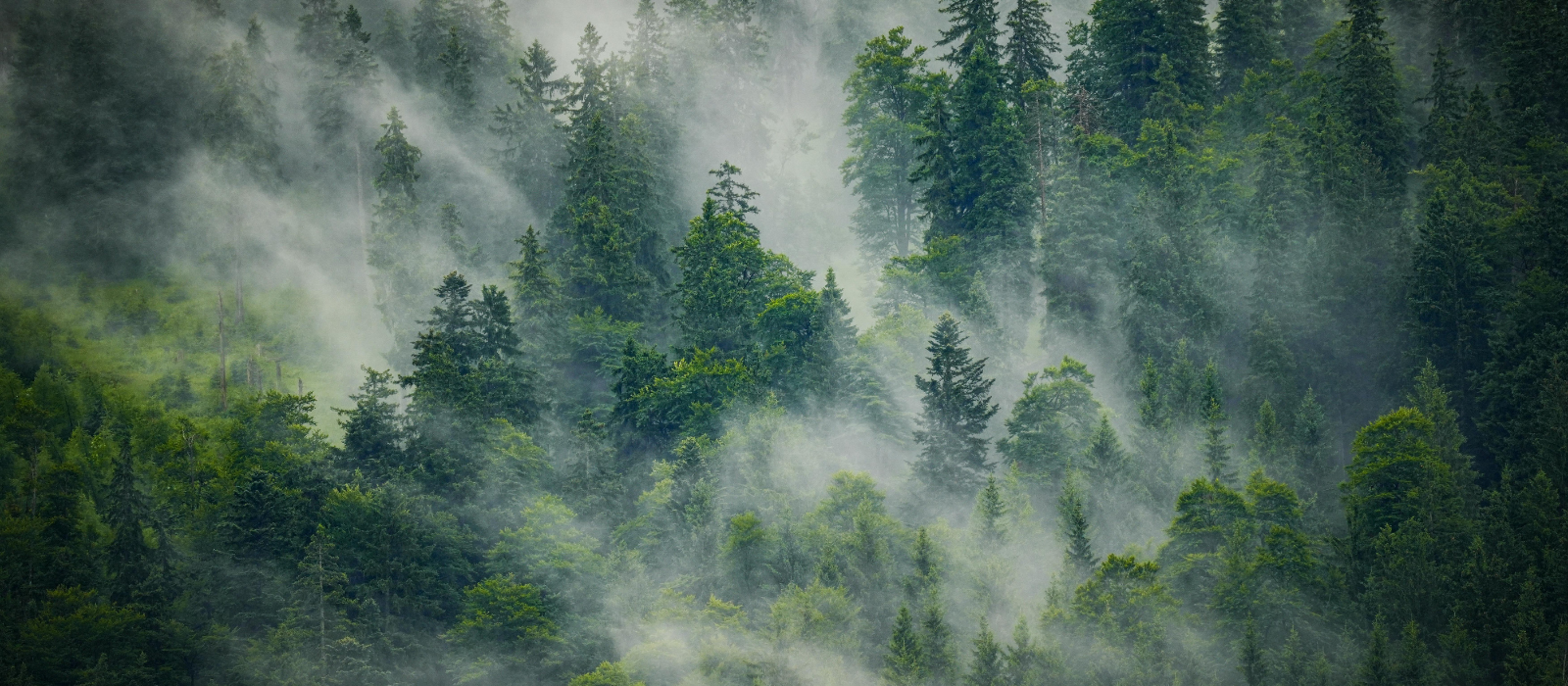
Renowned writer Dalene Matthee called the Knysna and Tsitsikamma forests of the Southern Cape the ‘Enchanted Forest Land’. A forest wonderland that enriches the soul with its grandeur, and beauty, but also a sensitive self-sustained world that requires careful management. Protected within the Garden Route National Park, these forests are made accessible to people to enjoy. Trails, view sites and adventure activities contribute to the attraction of the Garden Route, visited by thousands of tourists each month.
Early travellers and naturalists of the 18th century marvelled at the abundance of fauna and flora of the region. Famous botanists and naturalists like Carl Thunberg, Anders Sparrman and Francois Le Vaillant encountered vast forests, with plentiful game. Herds of elephants (Loxodonta africana) and buffaloes (Syncerus caffer) roamed the open areas,occasionally entering the forests. Many plant and animal species were named and introduced to science by these visitors, including forest birds like the beautiful Narina Trogon (Apaloderma narina) with its glossy blue-green feathers and bright red chest.
Collectively these forests are known as the Southern Cape forests, encompassing the Knysna forests in the west and the Tsitsikamma forests in the east. Hemmed in between the coast and the inland Outeniqua and Tsitsikamma mountains, these forests stretch some 220 kilometres from Ruitersbos near George in the west to Witelsbos near Humansdorp in the east. It is the largest cluster of almost continuous rainforests in Southern Africa, covering approximately 60 500 hectares.
The general perception of the Southern Cape forests is that of tall forest trees topped by giant Outeniqua yellowwood trees (Afrocarpus falcatus) and a forest floor filled with shrubs and flowering pAlants, with secretive animals like bushbuck (Tragelaphus scriptus) and the brightly coloured Knysna Loeries (Tauraco corythaix). Yet the lay of the land from coast to the mountains, cut through by ravines, has led to a variety of forest forms with a mix of different plant and animal species. Scientists divide the forests into six forest types, such as low dry forests near the coast, tall moist forests on the coastal plateau, and low wet forests in the mountains with an abundance of ferns in the understorey. Each forest type requires a different management approach.
Historically the woodcutters working in these forests harvested trees in the tall moist forest types. Since 1939 the forests were closed to the woodcutters. Extensive scientific monitoring of the forests since the 1930s led to an effective sustainable forest management system, which allowed single trees to be selected and harvested only if they are in a terminal phase of their life cycle, according to criteria such as the extent of crown die-back. For many decades, Knysna has been known for its unique hand-crafted furniture and carvings from sought-after indigenous woods such as yellowwood (Podocarpus species) and stinkwood (Ocotea bullata).
The herds of buffalo referred to by the early pioneers were decimated by hunters by the end of the 19th century. As farms expanded the surviving elephants were forced out of their open ranges into the forests, where their numbers declined to the extent that only one survives today. Known as Oupoot, the elephant causes great sensation in the media on the rare occasions that she makes an appearance.
In The Knysna Story published in 1976, author Arthur Nimmo described the forest management then being established by a specialized forest research and management unit. He considered it as “…an extremely complicated scientific business…”, which is still the case today. “Steadily these forests are brought under control, composition and conditions in each area studied, salients closed, burns healed, exotic invasions expelled…”.
In the dappled light on the forest floor a wide variety of plant species prosper. Ferns abound under the low canopy of low wet forests. The most spectacular are the large tree ferns (Cyathia capensis) which turns a popular picnic spot called the Valley of Ferns into a faerie wonderland. In the drier scrub forest near the coast, one will find hardy plants under the stocky milkwood trees (Sideroxylon inerme) such as the num-num berries (Carissa bispinosa), which have conspicuous forked thorns and bear small red edible fruit. In the tall forests various shrub species occur underneath the canopy, like black witch-hazel (Trichocladus crinitus) and the wild pomegranate (Burchellia bubalina) with its spectacular clusters of red flowers in summer.
Despite their robust appearance, the forests are vulnerable. The forest litter, shallow root systems and nutrient recycling form part of a tender lifeline that needs protection from human interference. A variety of attractive mushrooms and bracket fungi adorn the damp and shaded parts of the forest floor, which feed on fallen leaves and rotting wood, thereby accelerating their decay and the recycling of nutrients necessary for the plant life.
Imprints in the soil testifies to animal life of the forest, and if you are lucky, you might spot the imprints of blue duiker (Philantomba monticola), bushpig (Potamochoerus larvatus), or even that of a leopard (Panthera pardus). Sound travel far through the forests. From the tree crowns one may hear the piercing call of a black-hooded oriole (Oriolus larvatus), or the coarse ‘kok-kok-kok-kok’ call of a Knysna loerie. This iconic forest bird with its emerald-green and scarlet plumage is truly breathtaking in flight, with a brilliant display of crimson wings.
Forests scientists like myself deal with the dry science and mathematics of the magical Knysna and Tsitsikamma forests which is necessary for their management, but even we become emotionally attached to this wonderland. No one could describe this spiritual dimension better than Dalene Matthee: “Those who have experienced the forest in all its moods return home enriched. They do so in the knowledge that should man destroy the last of the forests, some of his inner peace, freedom and joy will be lost forever.”
Wessel Vermeulen is a retired Terrestrial Scientist of the South African National Parks. He served three decades in the Knysna forest region.
Teken gerus in op Plus 50 tydskrif vir meer interessante stories oor mense, geskiedenis, argitektuur, leefstyl en gesondheid: https://www.plus50.co.za/teken-in-subscribe/
Nuutste Artikels
Latest Articles
Streek
Region



ATKV Promosie
Promotion


Kontak Ons
Contact Us
Redaksiesekretariaat
Editorial secretariat
Tel: 012 348 8706
plus50@plus50.co.za
Advertensies & Bemarking
Advertising & Marketing
Rienie Coetzee (rienie@plus50.co.za)
082 776 3889
Linda Joubert (linda@plus50.co.za)
071 244 3399
Intekenare • Subscribers
Skakelbeampte / Public Relations Officer
Tel: 012 348 8706
plus50@plus50.co.za
Hoofkantoor | Head Office
Tel: 012 348 8706
Suite 145, Privaatsak/Private Bag X19,
Menlo Park 0102
2de Vloer/2nd Floor, The Hillside 318, Lynnwood,
Pretoria.
